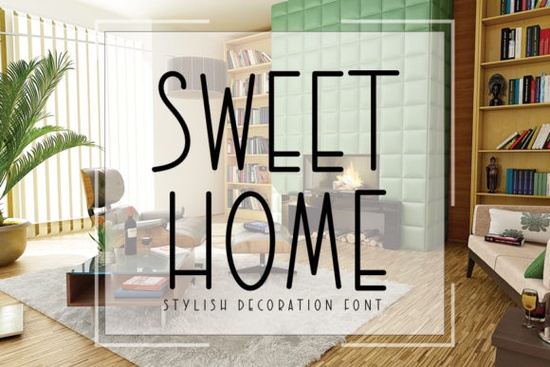
If you are searching for a clean, understated typeface that works quietly in the background while keeping your designs readable, the Sweet Home Font delivers exactly that kind of steady reliability. It belongs to a growing group of minimal sans serifs that remove visual clutter without sacrificing character. When you strip away heavy weights, thick strokes, or decorative flourishes, you are left with a typeface that lets your actual message take center stage. This approach has become especially useful for independent makers, online store owners, and freelance graphic designers who need typography that scales smoothly from tiny product labels to full-size wall art.
Why do creators gravitate toward this style of lettering?
The appeal lies in how balanced the proportions feel across different media. Each character maintains consistent spacing, which reduces awkward gaps when words are stretched or rotated during layout. The rounded terminals and open apertures make it highly legible even at smaller point sizes. You will notice how quickly it pairs with photography-based products, because the clean geometry does not compete with detailed images. Many crafters use it for embroidered patches, vinyl decals, and tote bag prints where simple lines reproduce cleanly on textured fabrics or curved surfaces. The typeface also respects negative space, giving your compositions room to breathe rather than feeling cramped by overly dense letterforms.
How does it handle everyday commercial applications?
When you move from concept to production, consistency matters more than novelty. This font performs predictably across vector editing software, laser cutters, and screen printing setups. The uniform stroke weight prevents ink bleed on cotton shirts or wax paper stickers, while still holding up on glossy posters and packaging inserts. Small business owners often rely on it for daily operations like price tags, social media templates, and email headers because it reads clearly on both mobile screens and desktop monitors. It avoids the rigid, corporate feel of standard system fonts by offering subtle curve variations that keep the design looking intentional. Managing multiple product lines becomes faster when you reuse a single reliable typeface.
What happens when you pair it with heavier or decorative styles?
Contrast creates hierarchy, and this neutral base provides a stable floor for stronger accents. Designers typically combine it with slab serifs, handwritten scripts, or bold condensed faces to establish clear reading orders. The straightforward structure allows secondary elements like icons, badges, or pattern borders to shine without fighting for attention. You can safely experiment with tracking adjustments since the baseline remains tight enough to prevent accidental collisions between adjacent letters. For seasonal collections or limited edition drops, swapping weight or case alone generates fresh layouts without introducing new typefaces into your asset library. Keeping your typography restrained actually makes brand recognition easier over time.
Should I explore alternative minimalist options in the same family?
Expanding your toolkit with closely matched alternatives saves hours during fast-paced launch weeks. If you occasionally need slightly wider letterforms or tighter kerning for headline layouts, checking out a related release like the Bird House collection gives you access to coordinated shapes without breaking visual continuity. Sticking within a cohesive design language ensures that your storefront, packaging, and digital ads share the same underlying rhythm. You can also browse the main product page to see how the original integrates with broader typographic sets. Maintaining a small, well-matched library keeps your workflow lean and your output professional.
How do I get started without running into licensing or setup delays?
Before dropping any typeface into client files or marketplace listings, verify the permitted usage scope for your specific project tier. Most modern marketplaces bundle straightforward commercial licenses that cover physical merchandise and digital downloads, though high-volume resale usually requires an extended agreement. Keep your installation folder organized by tagging version numbers and export formats upfront, since raster previews often appear differently than vector outlines. Test your final artwork at actual production size before committing to bulk runs, as scaling artifacts rarely show up in thumbnail views. A quick proof check saves material waste and prevents last-minute redesigns.
If you want to explore other clean options in this space, you can visit the official listing for Sweet Home Font to compare available weights and sample packs.
Implementation checklist for smooth project delivery
- Verify license coverage before uploading designs to print-on-demand platforms or Etsy.
- Convert text to outlines only after double-checking spacing at final print dimensions.
- Export separate PNG layers for transparent backgrounds when placing graphics on colored substrates.
- Run a test cut or screen print sample to confirm ink adhesion and blade tolerance on your target material.
- Archive your master files inside a dated folder labeled with the intended product line and colorway.
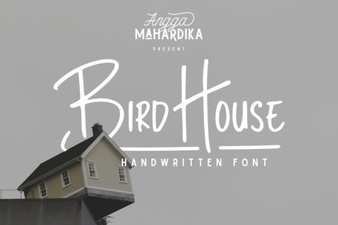 Creative Bird House Font Design Projects
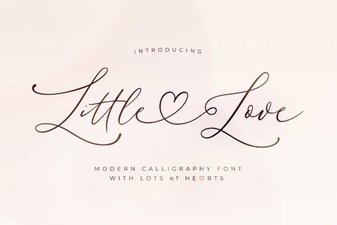 Little Love Font: Designing with Warm & Friendly Typography
 Designing with Authentic Gothic Old English Fonts
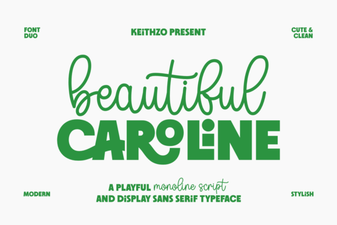 Beautiful Caroline Font: Elegance for Creative Projects
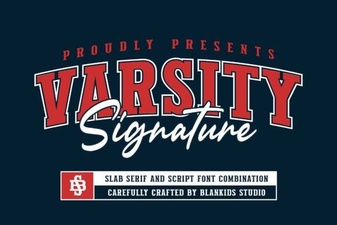 Signature Fonts for Sporty, Creative Design Projects
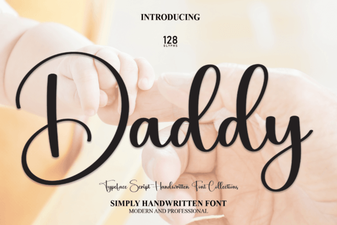 Daddy Font: Unleash Bold Typography Ideas